UK software engineering studio

Stop entering the same job into three systems.

One place that holds the job, the paperwork and the numbers, so nobody types the same thing twice and the admin stops eating your evenings.

Studio record

Enterprise software
12 years
Who does the work
Dan Tinsley
  • Fixed price per stage
  • You own the code
  • Based in Lancashire
  • Builds from £5k

Shipped work

Software we've shipped, not a list of logos.

We have no client case studies to show yet, so here is the next best evidence: products we designed, built and operate ourselves. One is live and you can go and use it today.

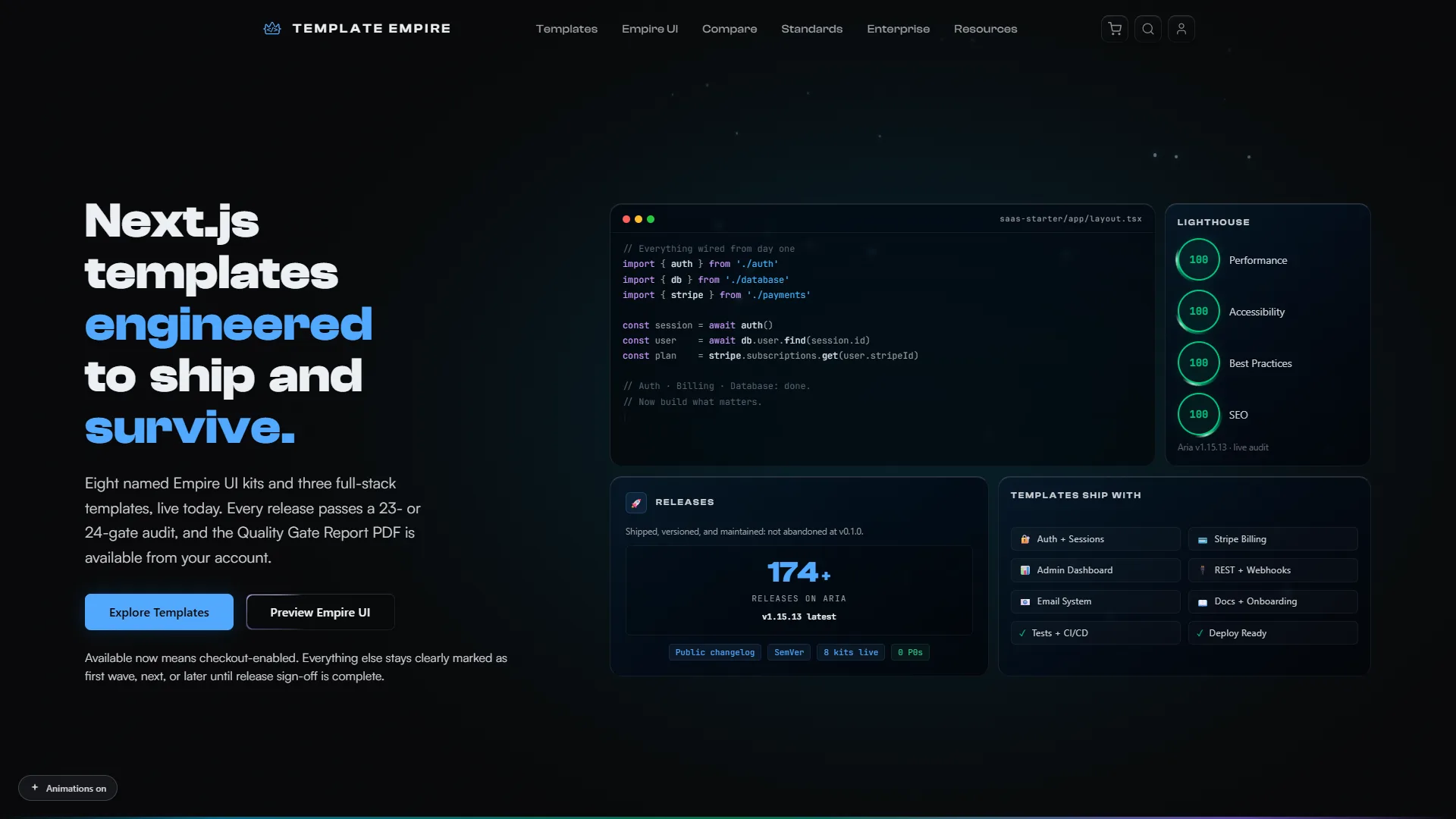
Template Empire homepage: Next.js templates engineered to ship and survive, with a live Lighthouse audit showing 100 for performance, accessibility, best practices and SEO, and a public release log of 174+ releases.
Live

Template Empire

Premium Next.js templates and UI kits, built to ship.

A marketplace of production-ready UI kits and full-stack Next.js starters. Eight Empire UI kits at launch, each held to a high quality bar before release. Built for developers who want a serious head start, not a template they have to gut and rebuild.

Next.js 16, Tailwind v4, TypeScript strict

Also built here

Products designed and built in-house, shown as they stand. Client work comes first, so these move when there is room for them to.

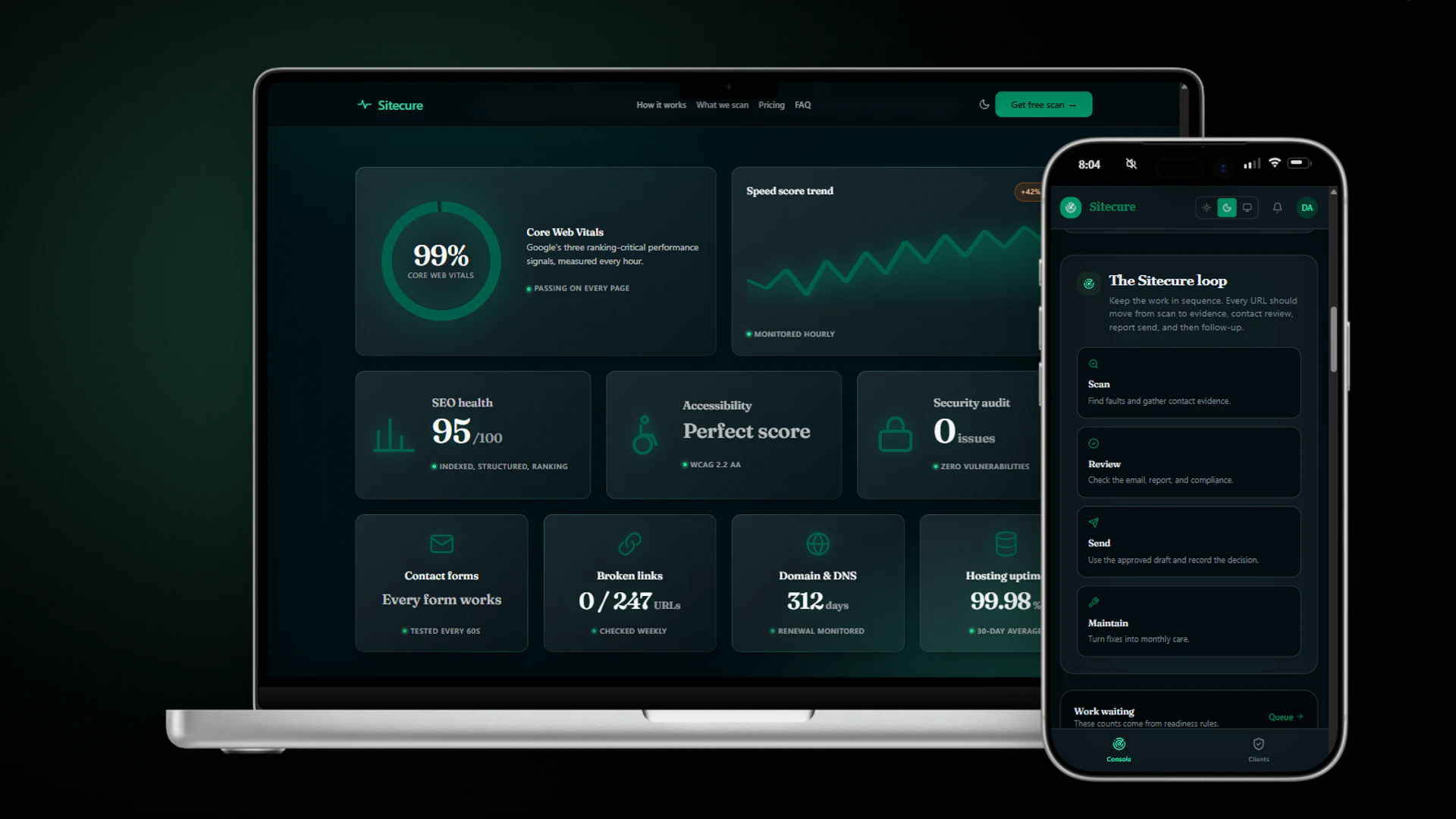
  • SiteCure dashboard on a laptop and phone, showing Core Web Vitals, SEO health, accessibility, security and uptime monitoring.
    Built

    SiteCure

    Website monitoring and maintenance for UK small businesses. Uptime, updates, and fixes handled in the background, so owners never have to think about their site.

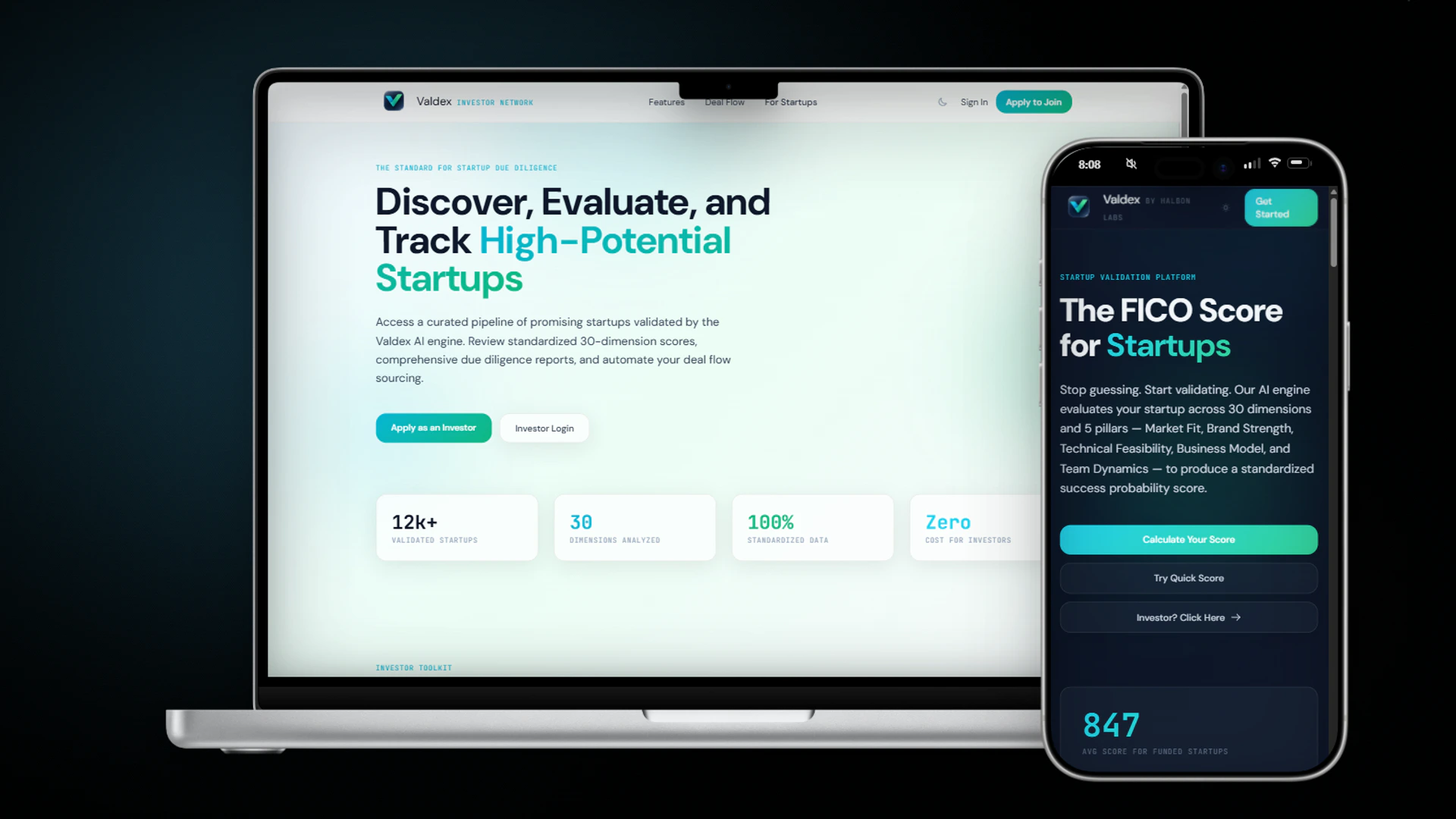
  • Valdex landing page on a laptop and phone, a startup validation platform that scores startups across thirty dimensions.
    Built

    Valdex

    The FICO score for startups. An AI engine evaluates an idea across 30 dimensions and 5 pillars (Market Fit, Brand Strength, Technical Feasibility, Business Model, and Team Dynamics) to produce a standardized success-probability score, so founders build what people actually want.

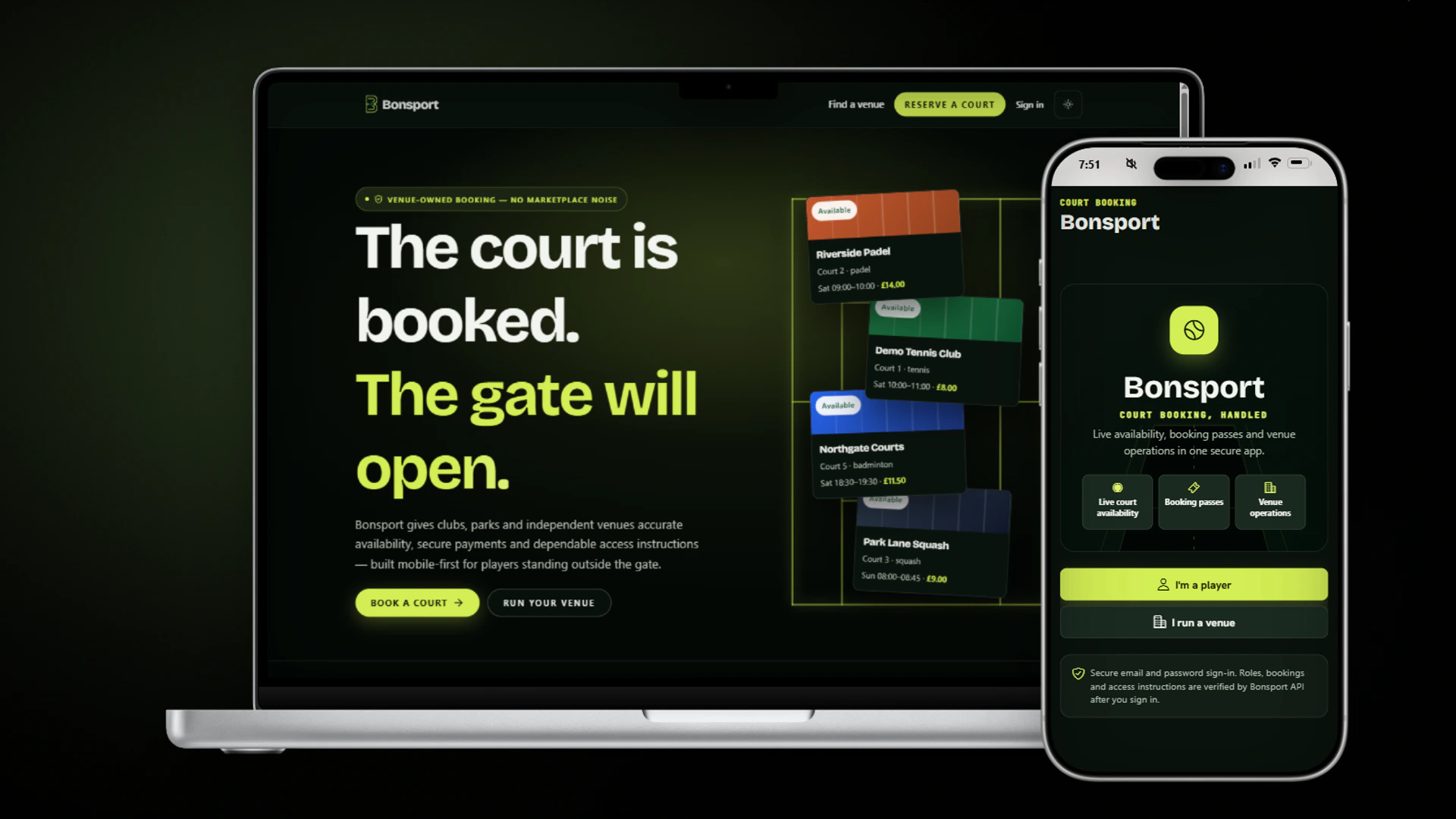
  • Bonsport landing page on a laptop and phone, a court booking platform showing live availability for tennis, padel and squash venues.
    Built

    Bonsport

    Bonsport gives clubs, parks and independent venues accurate availability, secure payments and dependable access instructions. Venue management and player bookings from web or the mobile app.

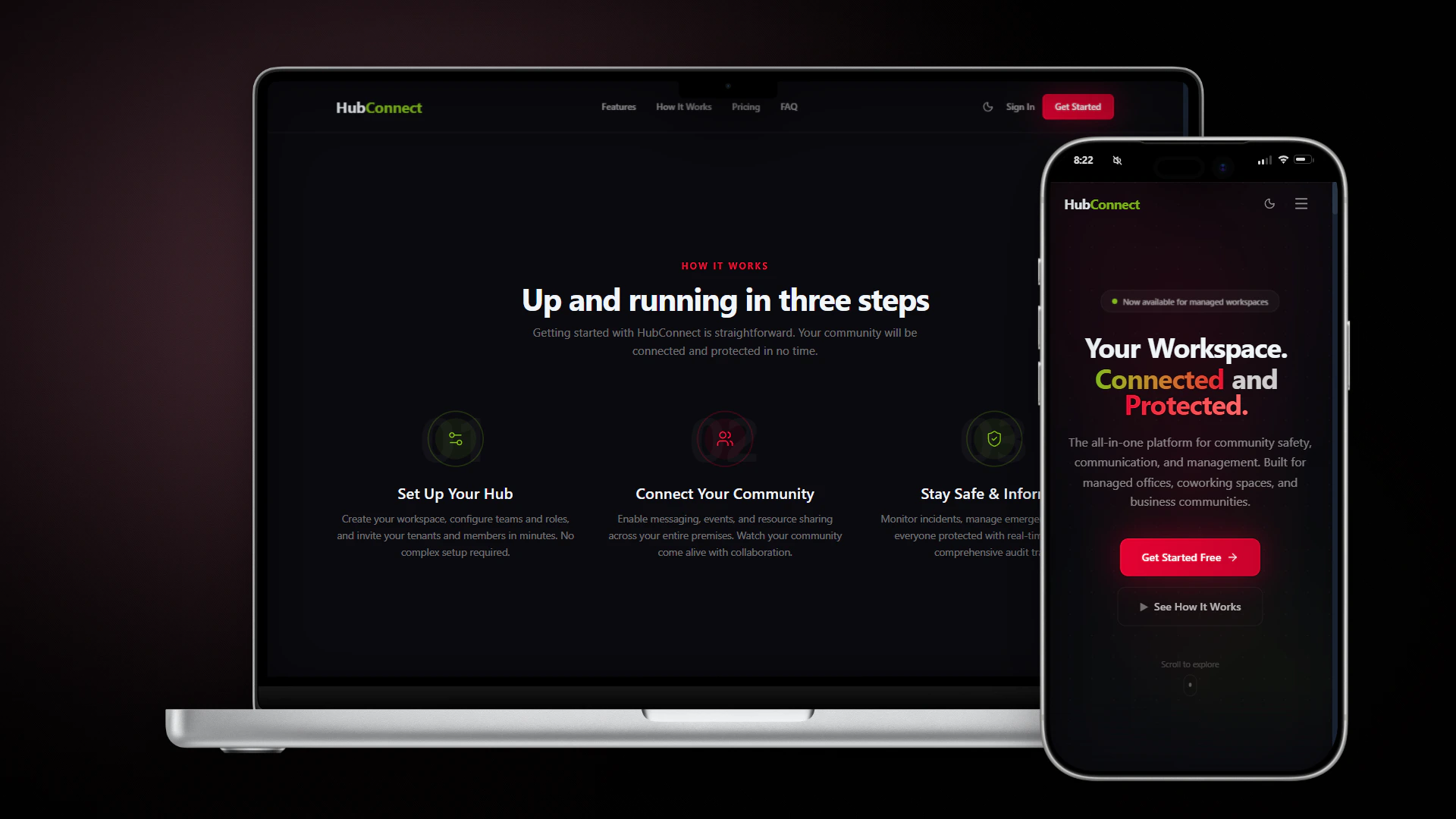
  • HubConnect landing page on a laptop and phone, a safety and communication platform for managed offices and coworking spaces.
    Built

    HubConnect

    The all-in-one platform for community safety, communication, and management. Built for managed offices, coworking spaces, and business communities.

How we think

Before the software, the operating model.

We work out how the job really moves through the business, including what goes wrong, before designing a single screen. The software inherits the operating model, not the other way around.

Illustrative operating model

  1. In the business

    Work comes in by phone, email, the website and WhatsApp, and someone has to remember to pick it up.

    01

    Enquiry

    In the system

    One list. Every enquiry on it, nothing counted twice, and a name against each one.

  2. In the business

    Someone goes out, takes photos and writes it down, often on paper and usually away from a desk.

    02

    On site

    In the system

    Filled in on a phone, on site, with no signal. It is on the job before you are back in the van.

  3. In the business

    Pricing sits in a spreadsheet and in people's heads, and the quote gets done in the evening.

    03

    Priced and agreed

    In the system

    The pricing written down once and applied the same way every time, with a record of who agreed what.

  4. In the business

    The job gets done, then the same details get typed again into the invoice and the accounts.

    04

    Done and paid

    In the system

    Typed once. Everyone who needs it can see it, it goes to Xero, and the month end builds itself.

Engagement model

Software that fits how you already work.

Most systems for small businesses come with far more in them than you actually run. We build the part you need, around the way your business already does it.

What we build

The shape changes with the problem. The standard does not: understand how the business actually runs before deciding what to build.

The system your team logs into

Jobs, customers, bookings and the paperwork that goes with them, in one place your staff will actually use because it only contains the things you do.

Something that works on a phone

For the people who are out on jobs. Fill it in on site, with no signal if needed, and it is on the record before they get back.

Making your tools talk to each other

If the same details get typed into two systems, that is a job for software. We connect what you already run, Xero included, so it only gets entered once.

Replacing the spreadsheet

The one everybody depends on and nobody wants to touch. We turn it into something that cannot silently break when one person changes a formula.

How we work

Experience shaped by systems businesses rely on.

Founded by Dan Tinsley after more than a decade building enterprise software: the systems behind quoting, inspections and reporting across a UK firm. Every job runs the same way: work out how the business really operates, then build the simplest thing that does it properly.

  1. 01

    Understand

    Work out how the job actually moves through your business now, who touches it, and what already has to keep working.

  2. 02

    Define

    Write down exactly what gets built and what does not, so there is no argument later about what was included.

  3. 03

    Design and build

    Build it in pieces you can see and try, so you are never waiting months to find out whether it is right.

  4. 04

    Launch and operate

    Get it live, show your team how it works, write down what matters, and agree who looks after it from there.

Built to a standard, not just until it works

The same checks run on every build before it goes anywhere near your business. Not a final once-over, but part of the work itself.

  • Your customers' details are handled properly, and the usual ways software leaks them are checked for before release
  • It works on a phone, on a bad signal, and for staff who use a keyboard or a screen reader
  • It is tested, so changing one thing does not quietly break another
  • It is built on current, well-supported technology, so it is still maintainable in three years

Engagement and pricing

What it costs, and what you get to keep.

Most people make you get on a call before they will tell you. Here is the price, what a build usually comes to, and what you own at the end of it.

Start here

The plan

£1,500Fixed price, paid up front

Go ahead within 30 days and the fee comes off the price of the build.

Before anyone builds anything, we work out exactly what you need and write it down: what it does, what it costs, and how long it takes.

What you get

  • How the work actually moves through your business now, written down
  • Exactly what the software will do, and what it will not do
  • What it needs to talk to, Xero and anything else you already run
  • What the build costs, broken into stages, and when each one lands

The plan is yours to keep whatever you decide next. Take it to another developer, or build it in-house, and it still works.

What a build usually costs

Rough ranges, not quotes. The plan is what turns a range into one number.

£5k–£10kOne job, done properly
A spreadsheet turned into something solid, or a single tool built and launched. One system, not much that it has to talk to.
£10k–£25kA system the team runs on
Several people using it, real connections to what you already run, and the reporting that comes with it. Built and released in stages.
£25k+Bigger than one job
Built over several stages, each one priced and agreed on its own, with what happens after launch planned in from the start.

Keeping it running

From £150 a monthOptional, and you can stop any time

Once it is live, somebody has to keep it that way. If you would rather that was not you, we can look after it.

  • Hosting looked after, with updates and security patches kept current
  • Monitoring, so problems get found before your staff report them
  • Small changes and fixes each month as they come up
  • Somebody who already knows the system when something breaks

Not interested? That is a real option. Everything is handed over documented and in your own accounts, so your team or another developer can pick it up.

The terms every engagement runs on

You own what we build for you
The software we write for you becomes yours once the stage it belongs to is paid for. Open-source and third-party parts keep their own licences, as they do in any software, and we tell you which ones are in there.
Built in your own accounts
The software is delivered into your hosting, your repository and your service accounts, so you are never dependent on ours.
A fixed price for each stage
The build is split into stages. Each one has a price agreed before it starts and cannot go over without your say-so, and you see the whole expected cost up front. No open-ended hourly billing and no surprise invoices.
Support if you want it
Ongoing maintenance and improvement is available after launch, and optional. A clean, documented hand-over to your own team is equally fine.
Nothing only we can maintain
Standard tools, your accounts, documented at hand-over. If you ever need somebody else to take it on, they can, without starting again.
We will tell you if it is not a fit
Not every problem needs bespoke software, and not every project is one we are the right people for. If that is the answer, you will hear it from us early and plainly, rather than after you have spent money finding out.
Before you enquire

The questions worth asking first.

The things worth having straight before you commit to anyone, answered here rather than three emails in.

  • Is this not going to be more complicated than what we have now?

    That is the usual reason this kind of software gets bought and then abandoned: it arrives with far more in it than the business actually runs, so nobody uses it. We build only the part you need. If the honest answer is that a spreadsheet is already fine for what you do, we will tell you that instead of selling you something.

  • Will it talk to Xero?

    Yes, and to most of the other things you already run. If the same details are currently being typed into two places, connecting them properly is usually the first thing worth doing, and it is often where most of the time saving comes from.

  • Who owns the code?

    The software we write for you becomes yours as each stage is paid for, and it is built in your own accounts, your own hosting and your own repository. Like all software it also uses open-source and third-party components, which keep their own licences, and we list those at hand-over. Nothing is tied back to us and nothing stops another developer picking it up.

  • What does it cost?

    The plan is a fixed £1,500, and if you go ahead within 30 days it comes off the price of the build. Most builds land between £5k and £25k depending on how much there is, and anything bigger than that is delivered in priced stages rather than as one lump. The plan is what turns a range into real numbers, and it is done before you commit to any of it.

  • Who looks after it once it is live?

    Whoever you want. We offer a support plan from £150 a month that covers hosting, updates, monitoring and small changes, and you can stop it any time. If you would rather your own team ran it, that works too, because everything is handed over documented and in your accounts. It is not a condition of the build either way.

  • Do I have to commit to the whole cost up front?

    No. The build is split into stages, and each stage has its own price agreed before it starts. You see the expected total from the plan onwards, but you are only ever committed to the stage you are in, and you can stop between stages. That way nobody is guessing at a single number months ahead of the work.

  • Why am I paying for a plan instead of getting a free quote?

    Because a free quote is a guess, and when the guess is wrong it comes back to you later as extra cost. The plan is deliberately small and self-contained, and it is yours to keep. Some people call this a discovery phase. You can take it to another developer or build it in-house and it still works.

  • What happens if you are ill, or you stop doing this?

    Everything is built in your accounts, with standard tools, and documented when we hand over. That is deliberate. It means if we are not available, any competent developer can pick the work up without having to rescue it first. You are never left holding software only one person understands.

  • Have you done this for anyone else?

    Not yet, and we are not going to pretend otherwise. Halbon Labs Ltd is a new studio for client work. What sits behind it is 12 years of enterprise software experience and our own products in the market, including Template Empire, which is live and you can go and look at it today.

  • We already have a system. Can you work with it?

    Usually yes. Extending or replacing something that already exists is as much in scope as starting fresh, and reviewing what you have is part of the plan. Sometimes the right answer turns out to be fixing what you have rather than replacing it, and we will say so.

  • Do you use AI to build it?

    Yes, as part of the toolkit, the same as most current software development. It speeds up the routine work, which is part of why a fixed price is possible at this size. What it does not change: everything is reviewed, and everything goes through the same checks before release regardless of how it was written. On your data, we agree what we can and cannot access before a project starts, and anything sensitive is written into the data processing agreement rather than assumed.

  • Who actually does the work?

    Dan Tinsley, who runs the studio. Specialists come in where a project genuinely needs them, and you are told who they are before they start.

  • What happens to our data?

    Halbon Labs Ltd is registered in England and Wales and is the data controller for anything you send through this site. What you send is used to reply to you, and if the work goes ahead, to scope and deliver it. It is not used for marketing, not added to a mailing list, and never sold. The privacy notice sets out what is collected, where it goes and your rights under UK GDPR.

Start a conversation

Tell us what is going wrong.

What is taking too long, what keeps getting missed, and who it lands on. That is enough for us to tell you honestly whether we can help and what it would take.

Project request
Additional project detailsOptional. Add anything that helps us prepare.

Sent straight to us by email. See the privacy notice.

What happens next

  1. We read your request and reply by email within one working day.
  2. A short conversation about how it works now and what needs to change.
  3. If it is a fit, the plan (£1,500, fixed) sets out exactly what gets built, for how much, by when.